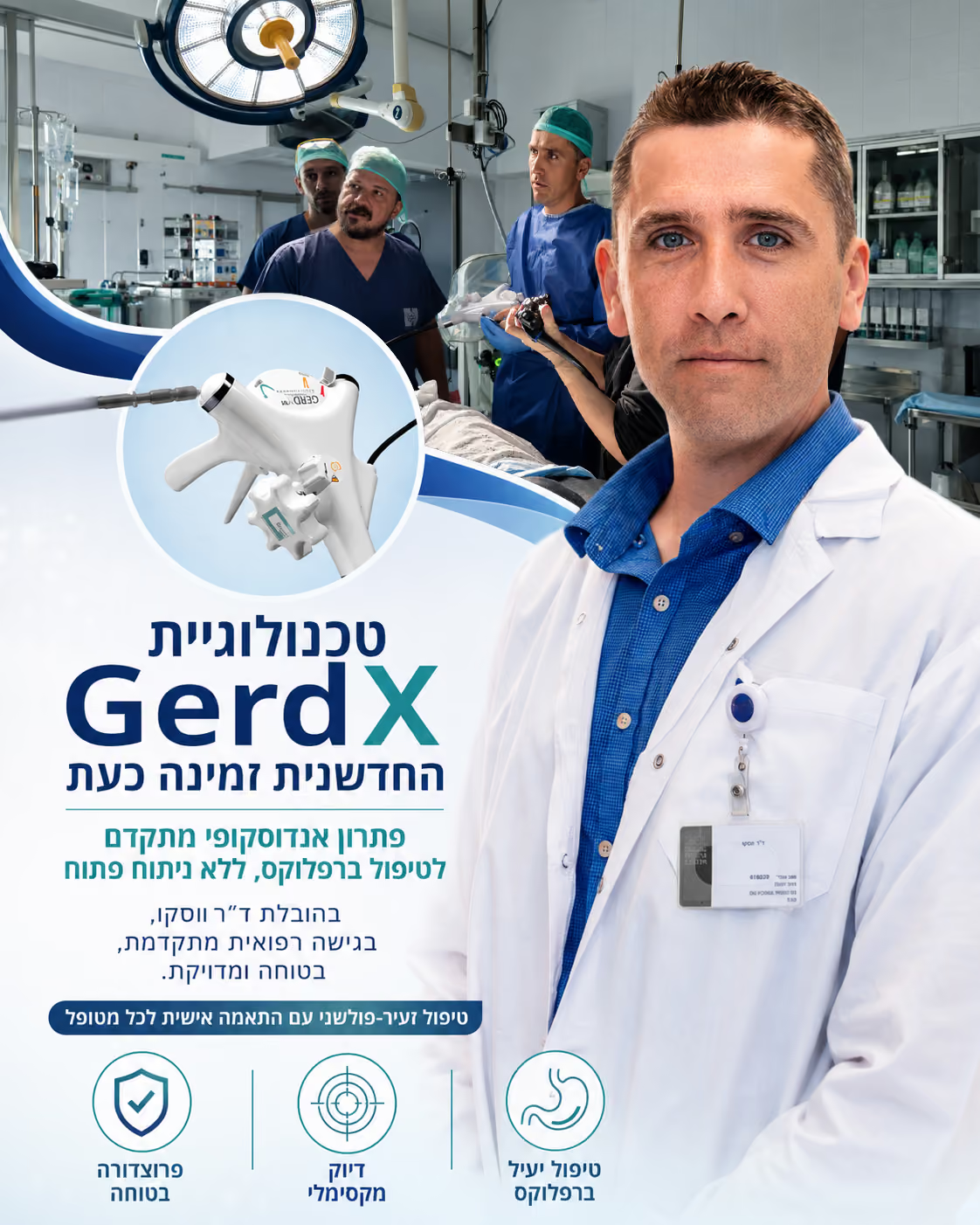
New in Israel: GERDx Procedure - The Next Generation in Reflux Treatment
GERDx technology represents one of the most advanced developments in the endoscopic treatment of gastroesophageal reflux disease (GERD). The procedure is performed endoscopically through the mouth, without external incisions. It uses a dedicated hydraulic system that enables full-thickness suturing of the stomach wall.
The aim of the procedure is to reconstruct and reinforce the valve mechanism between the esophagus and the stomach, reduce the backflow of gastric contents, improve reflux symptoms, and enhance the patient’s quality of life. In some patients, this improvement may also make it possible to reduce or even discontinue proton pump inhibitor (PPI) therapy, depending on their individual condition and under medical guidance.
Dr. Vosko is a member of one of the first medical teams in Israel to implement GERDx technology.
After completing dedicated training and certification in Germany, Dr. Vosko successfully performed several GERDx procedures in Israel and gained practical experience in using the system and planning the precise placement of sutures according to each patient’s individual anatomy.
The GERDx procedure received FDA clearance in the United States in 2024. During 2026, following completion of the regulatory process and successful clinical outcomes in Israel, the procedure was approved for use by the Israeli Ministry of Health. Patient admission for GERDx procedures is also expected to begin soon at Herzliya Medical Center.
The expansion of this service will enable more patients to undergo evaluation and treatment with this advanced technology at leading medical centers.
Looking for an advanced endoscopic solution for reflux,
without surgery or external incisions?
Contact Dr. Vosko for an evaluation of your suitability for the GERDx procedure.
Who is this treatment for?
- Chronic GERD: Dependence on PPIs or side effects from medications.
- Small Hernia: Up to 2-3 cm.
- Surgery Exclusion: Patients interested in a result closest to surgery (due to suture depth) but without the surgical risks.
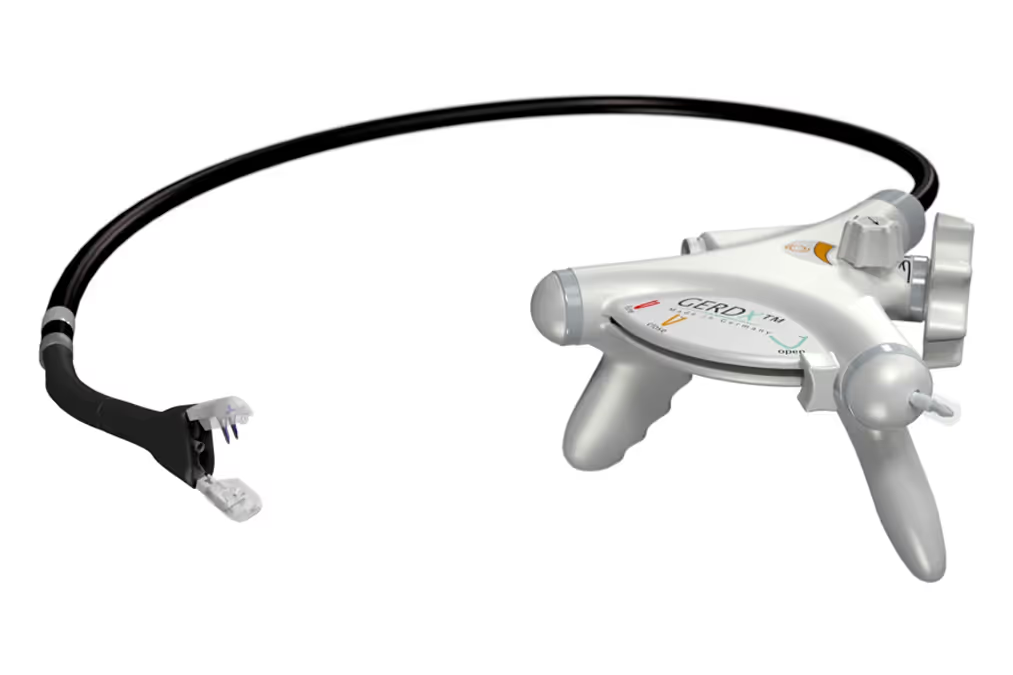
The advantage of GERDx over other methods is in the strength of the suture.
- Clinical experience with the new technology: Dr. Vosko is one of the pioneers of GERDx in Israel and has already successfully performed several procedures at Hadassah Medical Center. His practical experience enables him to assess the anatomy of the gastroesophageal junction and plan the procedure according to each patient’s individual needs.
- Advanced expertise in endoscopic suturing: The success of the procedure depends on accurate suture placement, the appropriate depth of suturing, and correct reconstruction of the valve mechanism. Dr. Vosko has extensive experience in advanced therapeutic endoscopy and endoscopic suturing techniques, and he also trains physicians in this field.
- Personalized selection from a range of reflux treatments: Dr. Vosko has experience with several endoscopic technologies for the treatment of reflux, including GERDx, TIF, and Stretta. His in-depth knowledge of the available options allows him to recommend the most appropriate treatment according to the patient’s symptoms, test results, anatomy, and personal preferences.
- Safety and treatment at leading medical centers: GERDx procedures are performed in an advanced medical environment, using the original system and by appropriately trained medical teams.
The new technology for reflux treatment is now available in Israel.
Dr. Vosko invites you to a professional consultation and an evaluation of your suitability for the GERDx procedure.



How is the treatment carried out?
How is the consultation conducted?
The device is inserted into the stomach. It uses hydraulic arms to grasp the stomach and esophageal tissue and create a new "wrap".
Then, a special needle passes a thick thread through all wall layers and locks it with a tiny plastic (Pledget).
The result: A mechanically tightened valve that prevents reflux.
How should I prepare for treatment?
How should I prepare for the consultation?
- Fasting: 12 hours.
- Recovery: Overnight hospitalization and discharge in the morning.
- Sensations: Mild sore throat or abdominal pressure (treated with painkillers).
What to expect the day after? (Recovery and recuperation)
Rapid recovery and discharge (usually after one night for observation).
Similar to the TIF procedure, a liquid and soft diet is required for several weeks so as not to burden the new sutures and allow the tissue to heal.
Are there risks or side effects?
Considered very safe.
Risks: Pain, mild bleeding, hematoma (bruise) in the pharynx area (passes on its own).
There may be upper abdominal or chest pain in the first days (controlled by medication), mild nausea.
Complications are rare and similar to other endoscopic procedures.
Information for patients from abroad (medical tourism)
The unit is equipped to receive international patients and collaborates with agents for a full logistical envelope.
Direct inquiries are also welcomed for rapid and efficient coordination.
An opportunity for patients from countries where the technology is not yet available, to receive treatment from a leading expert in Israel.
For your convenience, Dr. Vosko is fluent in Hebrew, English, and Russian.
How soon can I return to work and normal activities?
This is one of the outstanding advantages of the GERDx procedure. Because there are no abdominal incisions and the abdominal muscles are not affected, physical recovery is significantly faster compared to surgery. Most patients are discharged home the morning after the procedure and can return to office work or moderate activity within just 2-4 days. Full return (including strenuous sports) depends on the physician's assessment, but overall the "time out" from daily life is minimal.
What is the difference between GERDx and TIF?
That is an excellent question. Both procedures are endoscopic (incisionless) and share the same goal: to reconstruct the valve. The difference lies in the technological device and the suturing technique. The GERDx utilizes advanced hydraulic technology that enables deep, full-thickness sutures with very high precision. Dr. Vosko, as a pioneer in the field, tailors the choice of device (TIF or GERDx) to the patient’s individual anatomy.
Is it permitted to undergo an MRI scan with the GERDx sutures?
Yes, absolutely. The sutures used in the GERDx device are made of advanced medical materials (such as PEEK or medical-grade titanium) that are non-magnetic and completely safe for MRI scans. There is no restriction on undergoing imaging tests in the future.
Will I need to stop taking the PPI pills immediately after the procedure?
Not on the first day. The process of discontinuing the medication is gradual. During the first month, we continue medication at a decreasing dosage to protect the operated area while it heals and strengthens. The ultimate goal is to stop the medication completely, and most patients achieve this within about two to three months.
Is the treatment reversible? What happens if it is not successful?
The key advantage of the endoscopic approach is that we do not "burn bridges". The GERDx procedure restores the valve without resecting the stomach. In the rare case where the treatment does not provide complete long-term relief, the anatomy is preserved and surgical (laparoscopic) intervention can be performed without any problem or limitation.

We are with you - from the very first call, we understand that on the other end of the line is a person who may be concerned or in pain, waiting for answers. Therefore, we have built a service system that truly sees you:
- High Availability: A live service center is active Sunday-Thursday from 09:00 AM to 07:00 PM and on Fridays from 09:00 AM to 02:00 PM. In urgent cases, we are available beyond these hours.
- Direct WhatsApp Line: Do you have a question about fasting? Did you forget to ask something about your medications? Our customer service is available via WhatsApp for a quick response.
- Peace of Mind from Bureaucracy: Our team is highly experienced in working with insurance companies and supplemental health plans. We will assist you in preparing the necessary paperwork and authorizations so that you can focus entirely on your health.
GERDx - Advanced Endoscopic Treatment for Gastroesophageal Reflux
price