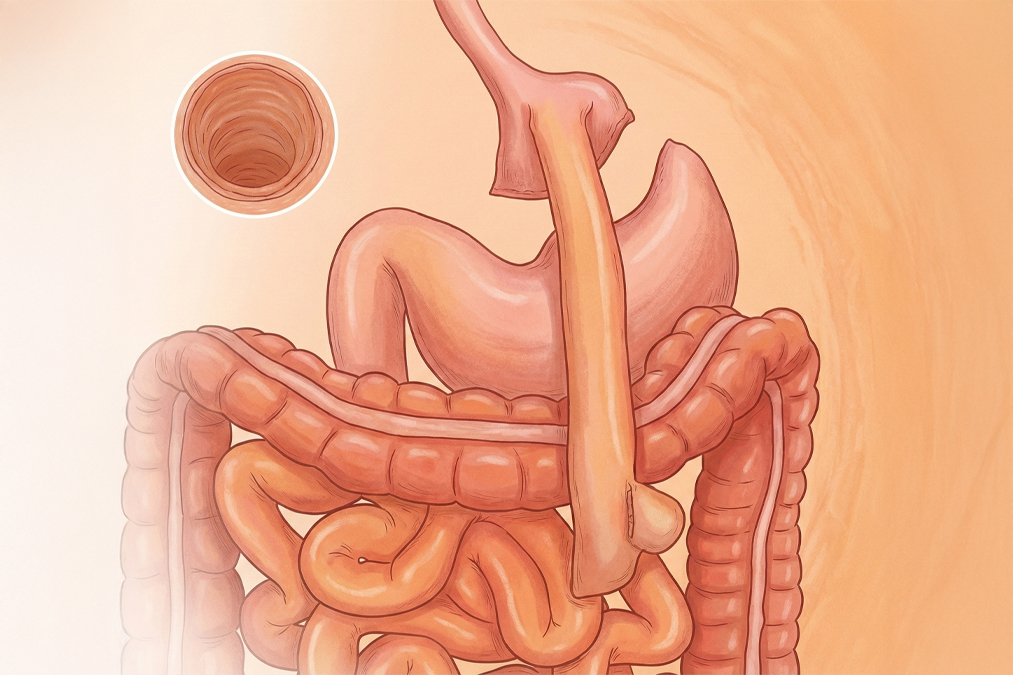
Endoscopic correction for narrowing the anastomosis after gastric bypass surgery, to treat weight regain
Underwent Gastric Bypass (Roux-en-Y) surgery, lost weight nicely, but recently the weight started creeping back up? You are not alone.
This happens to many, and usually, the reason is mechanical: The passage (anastomosis) between the stomach pouch and the intestine has widened over time, causing food to pass too quickly and the feeling of satiety to disappear.
The good news: There is no need for dangerous repeat surgery.
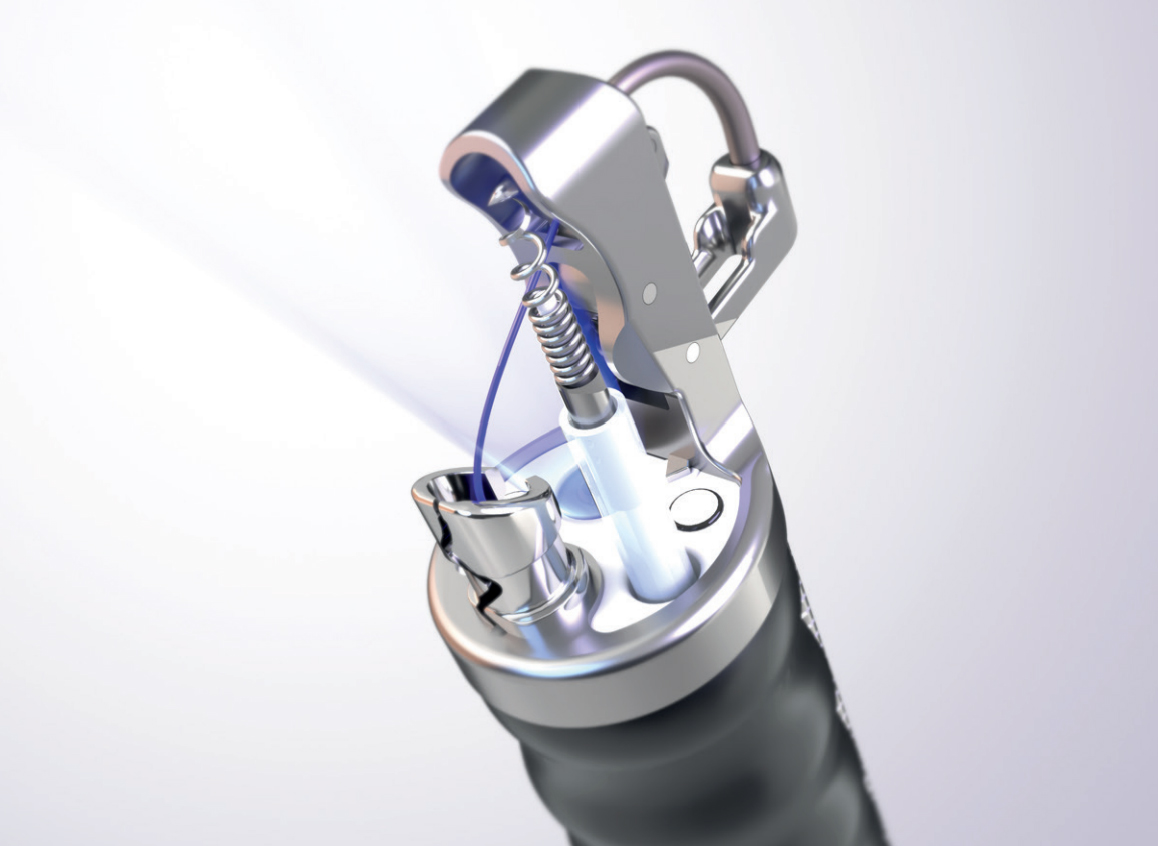
The TORe (Transoral Outlet Reduction) procedure is an endoscopic procedure performed through the mouth. Dr. Vosko uses an advanced suturing device (Apollo Overstitch) to re-narrow the passage, restore the feeling of fullness, and help you get back on the weight loss track.
Weight going up? There is a solution.
Check your suitability for TORe revision.
Who is this treatment for?
The treatment is specifically intended for patients who have undergone gastric bypass surgery in the past and suffer from:
- Weight Regain: Significant weight gain after a period of stability.
- Loss of Satiety: A feeling that larger amounts of food can be eaten than before without restriction.
- Dumping Syndrome: Phenomena such as weakness, palpitations, or diarrhea after eating (because food "dumps" too quickly into the intestine).
- Anastomotic Dilation: Confirmation via gastroscopy that the passage between the stomach and intestine is wide (over 15-20 mm).
Nutritional Guidance: The treatment includes connection to a dietitian specializing in bariatrics for guidance in the process of returning to correct eating.
Re-do Surgery after bypass is considered very risky due to adhesions.
TORe bypasses this risk entirely.
Performing TORe requires absolute mastery of the Overstitch suturing device.
- Proctor: Dr. Vosko serves as an official instructor for Apollo Endosurgery, teaching other doctors how to perform endoscopic sutures. You are treated by the teacher, not the student.
- Bariatric Experience: Dr. Vosko works in a multidisciplinary team including bariatric dietitians, understanding that the technical procedure must be backed by nutritional guidance for long-term success.
Don't let the weight come back. Regain control.
Dr. Vosko invites you for a consultation on the non-surgical TORe procedure.




How is the treatment carried out?
How is the consultation conducted?
- Preparation: Light general anesthesia.
- Cautery: The doctor lightly cauterizes the edges of the dilated passage (using APC plasma argon) to encourage healing and adhesion.
- Suturing: Using the Overstitch device mounted on the endoscope, Dr. Vosko performs circumferential sutures ("Purse-string") or individual sutures that shrink the outlet opening to a diameter of about 8-10 mm.
- Result: The passage becomes narrow, food stays in the stomach longer, and satiety returns.
How should I prepare for treatment?
How should I prepare for the consultation?
Preparation and Diet
- Fasting: 12 hours before the procedure.
- Diet Before: Recommended to switch to a liquid diet 24 hours prior.
What to expect the day after? (Recovery and recuperation)
- Discharge: Usually on the same day or the next morning.
- Pain: Mild sore throat or upper abdominal discomfort may occur, passing within a day or two.
- Diet (Critical): Gradual return protocol: Two weeks liquids -> Two weeks pureed -> Transition to solid. Adhering to the protocol is vital so the sutures do not tear.
Are there risks or side effects?
The procedure is very safe. Rare risks include mild bleeding from the sutures or nausea in the first few days.
Information for patients from abroad (medical tourism)
The unit is equipped to receive international patients and collaborates with agents for a full logistical envelope.
Direct inquiries are also welcomed for rapid and efficient coordination.
Patients from all over the world who underwent gastric bypass and are seeking a solution for weight gain come to Dr. Vosko to perform TORe, due to the high skill and the ability to return home within a few days.
For your convenience, Dr. Vosko is fluent in Hebrew, English, and Russian.
Is it possible to do this more than once?
In principle, yes. Because this is a suturing procedure without excision, if the outlet expands again in 5-10 years, it is technically possible to repeat the tightening.
Is recovery as difficult as it was after the first surgery?
Absolutely not. The first surgery was traumatic for the body, involving incisions and internal changes. TORe is an endoscopic procedure without incisions. Most patients return to work within just 2-3 days.
How long will I be on liquids?
The protocol is similar to sleeve gastrectomy, but shortened. Typically: two weeks of liquids or pureed foods, then transition to soft foods. Return to regular textures is faster than after the original surgery.
Will I have "Dumping Syndrome" again?
In fact, TORe can help prevent dumping syndrome (rapid gastric emptying). When the passage is too wide, food "drops" quickly into the intestine and causes drops in blood sugar. Narrowing the passage restores regulation and may improve your overall feeling after eating.
How much weight will I lose this time?
The weight loss with TORe is generally more moderate compared to the initial surgery. On average, a loss of 10-15% of your current body weight is expected. The main goal is to stop the weight gain and regain control, rather than necessarily returning to your lowest weight after surgery.

We are with you - from the very first call, we understand that on the other end of the line is a person who may be concerned or in pain, waiting for answers. Therefore, we have built a service system that truly sees you:
- High Availability: A live service center is active Sunday-Thursday from 09:00 AM to 07:00 PM and on Fridays from 09:00 AM to 02:00 PM. In urgent cases, we are available beyond these hours.
- Direct WhatsApp Line: Do you have a question about fasting? Did you forget to ask something about your medications? Our customer service is available via WhatsApp for a quick response.
- Peace of Mind from Bureaucracy: Our team is highly experienced in working with insurance companies and supplemental health plans. We will assist you in preparing the necessary paperwork and authorizations so that you can focus entirely on your health.
Gastric Bypass Revision (TORe)
price